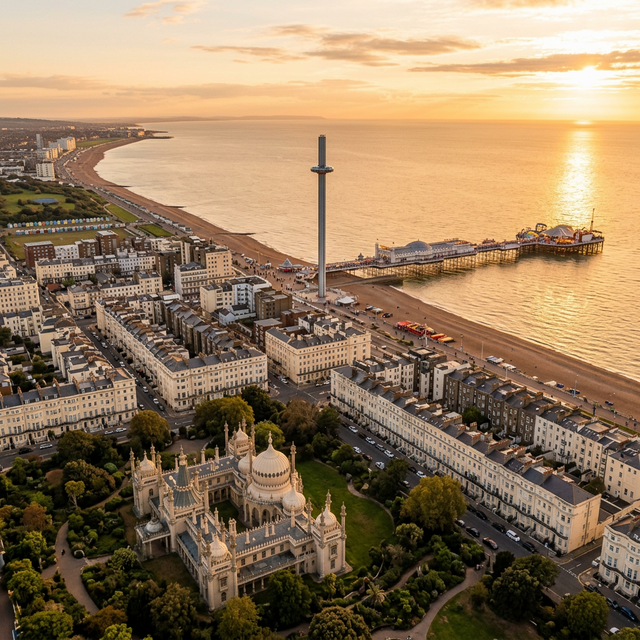
Burgess Hill, Brighton
Bridging Loans Burgess Hill, West Sussex
Burgess Hill sits in mid Sussex about 9 miles north of Brighton along the A23 and A273, a commuter town that has expanded steadily over the past two decades on the strength of its London Victoria rail link and the more recent Northern Arc development corridor. We arrange specialist bridging finance across the RH15 postcode that covers the town and its surrounding fringe, working with owner-occupiers in chain-break, refurbishment investors and development-exit borrowers across the substantial new-build and refurbishment flow that defines the town's bridging book.
Indicative monthly rate
0.55–1.5%
Subject to LTV, exit and security
The area
Burgess Hill in context.
Burgess Hill occupies a broad, gently undulating area east of the A23 between Haywards Heath to the north and Hassocks to the south. The town centre clusters around Church Walk, the Martlets Shopping Centre and the railway station, with the World's End and Sussex Way trading estates flanking the eastern industrial belt. St John's Park and Batchelors Farm Nature Reserve form the principal green spaces, with the South Downs visible to the south on a clear day. Mid Sussex District Council sits within Haywards Heath but covers Burgess Hill for planning, and the Northern Arc development corridor on the northern edge of the town carries one of the largest residential allocations in West Sussex with around 3,500 homes planned across the 2020s and 2030s.
Beyond the centre, the housing stock runs through Victorian and Edwardian terraces in the central streets, 1930s semis along the Junction Road and London Road belts, post-war estates at Folders Lane, Janes Lane and the eastern fringe, and substantial modern new-build at the Burgess Hill Plus, Royal George and Northern Arc developments. The town's economy mixes professional commuting to London and Brighton via the railway station, a stable layer of light industrial and distribution employment along the World's End and Sussex Way estates, the Roche and Elekta sites on Bell Lane carrying biotech and medical-device manufacturing, and a steady professional services and care-sector workforce tied to the resident population.
Sold-data signal
Property market in Burgess Hill.
Burgess Hill property sits entirely in RH15, with median sold prices typically running in the £380,000 to £440,000 band, pulling above neighbouring Brighton suburbs on the London commuter pull and the family-home weighting of the local stock. The spread runs from compact one and two-bed conversion flats in the central streets at £200,000 to £290,000, through two and three-bed Victorian and Edwardian terraces at £325,000 to £450,000, 1930s semis along Junction Road and London Road at £375,000 to £475,000, post-war semis on the eastern fringe at £350,000 to £475,000, and modern four and five-bed family homes at Burgess Hill Plus, Royal George and the early Northern Arc plots at £475,000 to £750,000.
Larger Edwardian and 1930s detached family homes with mature plots along Folders Lane, Keymer Road and the southern edge towards Ditchling Common stretch to £700,000 and beyond £1 million on the best examples. Most bridging in Burgess Hill sits between £275,000 and £600,000, with development-exit cases tied to the Burgess Hill Plus and Northern Arc completions running £500,000 to £2.5 million on completed plots. The town's value differential against Brighton coupled with the strong London commute makes it a consistent target market for both chain-break and refurbishment-to-BTL bridging.
Deal flow
Bridging activity in Burgess Hill.
Four deal flavours dominate the Burgess Hill book. First, chain-break bridging for owner-occupiers moving within the town, upsizing from a central conversion flat to a 1930s semi or modern family home, or moving onto Burgess Hill from Brighton, Hove or London. Professional in-migration tied to the London commuter pull and the Brighton secondary commute keeps a steady chain-break flow. Regulated cases at 0.55 to 0.75% per month over 6 to 9 months, passed to our regulated partner firms. Typical loan sizes between £300,000 and £600,000.
Development-exit and small-scheme bridging tied to the
development-exit and small-scheme bridging tied to the Burgess Hill Plus, Royal George and Northern Arc corridors. Completed schemes of 8 to 50 units refinance onto 9 to 15-month bridges at 0.75 to 0.95% per month as units sell down. The Northern Arc allocation of 3,500 homes across the 2020s and 2030s makes Burgess Hill one of the most active small-scheme development markets in West Sussex, and the bridging book reflects that with consistent development-exit and part-complete development finance flow.
Refurbishment-to-BTL on the central Victorian and Edwardian
refurbishment-to-BTL on the central Victorian and Edwardian terrace belt. Two and three-bed stock at £325,000 to £450,000 with £25,000 to £45,000 of cosmetic and medium refurbishment, exiting to BTL term loans once works complete. Rates 0.85 to 0.95% per month over 9 to 12 months at 70 to 75% LTV. Rental demand from London commuters, Roche and Elekta workers, and the local professional and care-sector workforce sustains yields on standard terrace stock.
Capital-raise bridging against unencumbered Burgess Hill family
capital-raise bridging against unencumbered Burgess Hill family stock. Long-standing owners of mortgage-free 1930s detached houses raise second-charge facilities at 55 to 65% LTV to fund deposit on onward acquisitions in Burgess Hill itself, Haywards Heath, Brighton or further afield. Typical loan band £200,000 to £500,000, rate 0.85 to 1.05% per month, term 6 to 12 months. The exit lands on the sale of the funded asset or a residential remortgage. Auction completions through the regional Clive Emson and Auction House rooms provide a fifth, smaller stream at the £275,000 to £400,000 entry band.
Streets and postcodes
Named streets we work across.
Burgess Hill sits entirely in RH15, covering the town centre, the World's End and Sussex Way industrial estates, the Folders Lane and Janes Lane post-war estates, and the Burgess Hill Plus, Royal George and Northern Arc development corridors.
Postcode areas
Streets in our regular bridging flow (19)
Read the full Burgess Hill geography note ›
Burgess Hill sits entirely in RH15, covering the town centre, the World's End and Sussex Way industrial estates, the Folders Lane and Janes Lane post-war estates, and the Burgess Hill Plus, Royal George and Northern Arc development corridors. Named streets in the regular bridging flow include Church Walk, Mill Road, Junction Road, London Road, Royal George Road, Station Road and Cyprus Road in the central belt. Folders Lane, Janes Lane, Keymer Road, Ditchling Road and Maple Drive run the southern and eastern flow. Birchwood Grove Road, Wivelsfield Road and the Burgess Hill Plus development streets carry the northern flow. Sussex Way, World's End and Victoria Road cover the industrial estate. The Martlets Shopping Centre sits at Church Road on the central retail spine. The Roche site sits at Bell Lane on the eastern fringe. Burgess Hill railway station sits at Station Road in the centre, and Wivelsfield station to the north on the western edge of RH15. Recent RH15 transactions feed into the regular underwriting band for two-bed flats, three-bed terraces and four-bed family homes across the town.
Demand drivers
Transport and rental demand.
Burgess Hill railway station sits in RH15 at Station Road, with direct services to London Victoria via Haywards Heath and Gatwick Airport in around 60 minutes, Brighton in 18 minutes, and onward services across the wider Brighton main line. Wivelsfield station on the northern edge of the town provides a second stop on the same line. The A23 runs east of the town between London via Crawley and the M23, and Brighton to the south. The A273 carries the central east-west flow between Hassocks and Haywards Heath. The B2113 runs north towards Lindfield and Ardingly.
Demand drivers are the London Victoria commuter pull through the railway station with around 5,000 daily commuters, the Brighton secondary commute via the same line, Roche pharmaceuticals at Bell Lane with around 300 staff, Elekta medical devices on the same site, the World's End and Sussex Way industrial estates carrying a stable layer of light industrial and distribution employment, and the steady professional services workforce tied to the wider resident population. The Northern Arc development corridor will add around 3,500 homes through to the late 2030s, supporting both family-home demand and the wider commuter rental market. Rental yields on RH15 conversion and terrace stock hold firm thanks to the dual London and Brighton commute, and resale liquidity on family-home stock holds firmly through the cycle thanks to the consistent professional in-migration.
Recent work
Our work in Burgess Hill.
Recent Burgess Hill bridging arranged from the Brighton desk includes a £395,000 chain-break facility for an owner-occupier moving from a Janes Lane RH15 1930s semi to a four-bed Northern Arc family home, passed to our regulated partner firm at 0.65% per month for 6 months. We also arranged a £1.2 million development-exit refinance on an eight-unit Royal George scheme, 12 months at 0.85% per month, while units sold down.
A third recent case funded a £325,000 refurbishment-to-BTL bridge on a Mill Road RH15 Victorian terrace, with £40,000 of works converting the property to a four-bed family let before BTL refinance at uplifted value. A fourth case raised £285,000 second-charge against an unencumbered Folders Lane RH15 detached family home for the borrower's deposit on a Haywards Heath portfolio addition, 55% LTV, 9 months at 0.95% per month, exited cleanly on completion of the onward purchase. The Burgess Hill book reads as a steady development-exit, chain-break and refurbishment flow tied to the strong local commuter economy and the active Northern Arc scheme.
Brighton coverage
Where we work across Brighton.
Burgess Hill sits inside a wider Brighton bridging book. Click any marker to step into another area we cover.
FAQs
Burgess Hill bridging questions
Can you arrange Burgess Hill bridging from a Brighton broker?
+
Yes. Burgess Hill sits 9 miles north of Brighton on the same rail line and A23 corridor, well inside our regular bridging footprint. We arrange Burgess Hill bridging on the same lender panel and the same indicative timetable as central Brighton work, with valuations covered by chartered surveyors who also work the wider mid Sussex stock. The geography does not change the pricing or the timetable.
Is Burgess Hill a good market for development-exit bridging?
+
Yes. The Burgess Hill Plus, Royal George and Northern Arc corridors carry one of the most active small-scheme development markets in West Sussex, with the Northern Arc allocation of around 3,500 homes underwriting consistent flow through the 2020s and 2030s. Pricing on development-exit bridging sits in the 0.75 to 0.95% per month band at 60 to 70% LTV, with terms of 9 to 15 months sufficient for most schemes of 8 to 50 units to clear at the local price tier.
What rental yields can investors expect in Burgess Hill?
+
Two and three-bed terrace stock in central RH15 at £325,000 to £450,000 typically achieves gross rental yields of 4.5 to 5.5%, with the higher band on smaller and more central stock and the lower band on the larger family-home formats. The London Victoria and Brighton commuter pull underpins rental demand, and the Roche, Elekta and World's End industrial estate workforces add a stable local tenant base. Yields hold firm enough to underwrite refurbishment-to-BTL maths through the cycle.
Tell us about the deal
Talk to a Burgess Hill bridging specialist.
Quick triage call, indicative lender terms inside 24 hours. We cover every BN postcode and the wider East Sussex property market.
Next step
Talk to a Brighton bridging specialist.
Indicative terms in 24 hours. We work on most cases within East Sussex on a same-day enquiry response and complete in 7 to 21 days where the title and valuation cooperate.