Property type: Healthcare
Healthcare Property Bridging Loans Brighton
We arrange bridging finance against healthcare property across Brighton and the wider East Sussex healthcare-property market. Loan sizes run £400,000 to £20 million, terms 6 to 24 months, completions in 14 to 28 days. Healthcare bridging is specialist underwriting; pricing sits 0.85 to 1.35% per month depending on operator covenant, regulatory position and the credibility of the exit.
- Decisions in hours
- Completion in days
- £100k to £25m
- East Sussex specialists
The asset class
What healthcare property looks like in East Sussex.
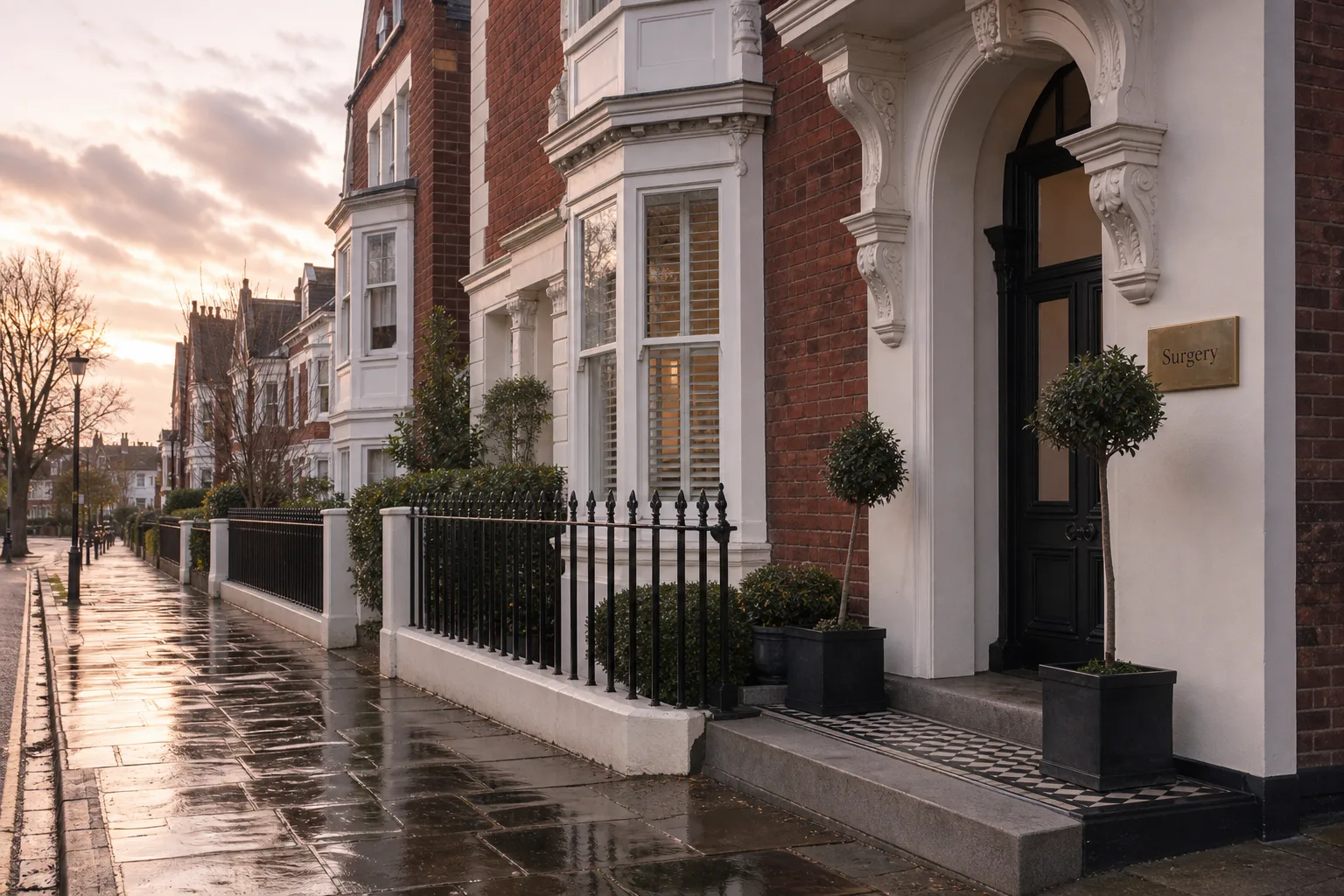
Healthcare property covers residential care homes, nursing homes, specialist learning-disability and mental-health units, GP surgeries, dental practices and standalone clinics. Each sub-segment carries its own valuation methodology, regulatory framework and lender appetite. Care homes are CQC-regulated and value tracks operator trading, occupancy and the local fee mix between self-funded and local-authority residents. GP surgeries trade on the lease structure with NHS Property Services or the relevant Integrated Care Board sitting behind. Dental practices split between NHS-contract value and private goodwill, with the building forming part of the underlying security.
Use cases
Bridging use cases for healthcare assets.
Healthcare bridging cases in this market cluster around four use cases. The first is purchase of a care home or nursing home from a retiring operator, where the buyer is a regional operator group running a roll-up strategy and bridging is used because term commercial debt cannot complete fast enough or because there is a CQC-registration transition that lenders want to see resolved before they will price term debt. The second is purchase of GP surgeries and dental practices coming out of partnership dissolution, where speed is required and the building is bought separately from the trading business. The third is refurbishment-and-re-registration cases where an older care home is bought, brought up to current CQC standards, and the bridge funds both the purchase and the works programme. The fourth is capital-raise against an unencumbered healthcare freehold, typically held by an operator looking to fund the next acquisition. Across all four, lenders care about the operator's CQC record, the trading evidence and the realism of the exit at stabilised operation.
Brighton context
Healthcare Property Across Brighton, Hove and the East Sussex Care Market
Brighton and the surrounding East Sussex population carries a mixed demographic profile, with a younger working-age skew inside the city and an older resident base across the wider county including Eastbourne, Bexhill, Hastings, Seaford and the South Downs market towns. The Royal Sussex County Hospital site at Kemptown anchors the acute health geography for the area, with the Integrated Care Board commissioning primary-care services that flow through GP surgeries across BN1 to BN3 and into surrounding postcodes. Dental practices in The Lanes, Kemptown, Hove and Preston Park trade on a mix of NHS contract and private revenue, with the building values stable. Across the wider East Sussex market, Lewes, Uckfield, Heathfield, Eastbourne and Hastings carry larger care-home stock with regional and national operator presence, supported by the older demographic profile across coastal East Sussex. Lenders comfortable on healthcare in this market typically have a dedicated specialist desk. Generalist bridging lenders rarely take healthcare at competitive pricing.
Valuation and lenders
Valuation and lender considerations.
Healthcare valuations come back on a trading-business basis for going-concern care homes, on an investment basis for tenanted clinics with a strong lease covenant, and on a vacant-possession-with-alternative-use basis where trading is interrupted or the operator is changing. Lenders lend on the lower of the relevant figures with an additional haircut for regulatory transition risk. LTV caps sit at 60 to 70% on tenanted clinics, 55 to 65% on going-concern care homes, and 50 to 60% on transition cases. United Trust Bank, Hope Capital, Shawbrook, Cambridge & Counties and OakNorth all take healthcare on bridging, with the dedicated healthcare desks at Allica Bank and HTB stronger at the larger end. CQC reports, trading accounts and operator covenant evidence drive the case.
What we arrange
What we typically arrange.
A typical healthcare bridge sits at £600,000 to £5 million, 55 to 70% LTV, 9 to 18 months term, 0.85 to 1.25% per month, arrangement fee 1.5 to 2%. Operator transition cases run longer and price higher. Refurbishment-and-re-registration cases include a monitored works tranche. Exit is typically refinance to term commercial debt with a healthcare-specialist lender, sale to a regional operator group, or sale-and-leaseback to a healthcare REIT. Completion in 21 to 28 days is normal given the CQC and operator due-diligence work.
FAQs
Healthcare bridging questions
Can we bridge a care home purchase in Brighton pending CQC registration transfer?
+
Yes, and this is one of the more common healthcare cases. Lenders price for the regulatory transition risk and the period during which the new operator is awaiting full CQC registration. LTV typically caps at 55 to 60% during the transition, moving up to 65% once registration is confirmed and trading is rebased. The exit is usually refinance to term commercial debt with a healthcare-specialist lender at 12 to 18 months. We work with healthcare-property specialists from valuation through to legal completion.
How do bridging lenders view GP surgery purchases across East Sussex?
+
GP surgeries with a long lease to NHS Property Services or to a GP partnership backed by the relevant Integrated Care Board read as relatively low-risk investment assets. Lenders price at 65 to 70% LTV on the investment value, with rate at 0.85 to 1.05% per month for clean cases. The exit is usually refinance to term commercial debt at a healthcare-specialist lender. Partnership-dissolution cases where speed is required sit firmly in the bridging space.
What does a refurbishment-and-re-registration case look like for a care home?
+
The buyer acquires an older care home that needs material works to meet current CQC standards. The bridge funds the purchase at 60% LTV on vacant-possession value plus a works tranche released against monitoring sign-off. Once the works are complete and the new operator is registered with CQC, trading is rebased over six to nine months, and the exit is refinance to term commercial debt with a healthcare-specialist lender. Total term 15 to 24 months is typical.
Tell us about the deal
Indicative terms within 24 hours.
A short triage call, then a sized indicative offer against a named lender for your healthcare property in Brighton or across East Sussex.
Regulated bridging on owner-occupied residential property falls under FCA regulation. Unregulated bridging on commercial and investment property does not. We are not directly regulated by the Financial Conduct Authority, and we introduce regulated cases to authorised partners who carry out the regulated activity.
Next step
Talk to a Brighton healthcare bridging specialist.
We arrange short-term finance on healthcare property across Brighton, the Brighton and Hove unitary authority and the wider East Sussex market. Indicative terms in 24 hours.