Property type: Industrial
Industrial Property Bridging Loans Brighton
We arrange bridging finance against industrial property across Hollingbury, Moulsecoomb, Portslade, the Lewes Road corridor and the wider East Sussex industrial belt. Loan sizes run £200,000 to £15 million, terms from 1 to 24 months, completions in 7 to 21 days. Industrial bridging is one of the strongest-performing parts of the South Coast bridging book; pricing sits 0.7 to 1.1% per month for clean cases and 1.1 to 1.4% for vacant or specialist units.
- Decisions in hours
- Completion in days
- £100k to £25m
- East Sussex specialists
The asset class
What industrial property looks like in East Sussex.
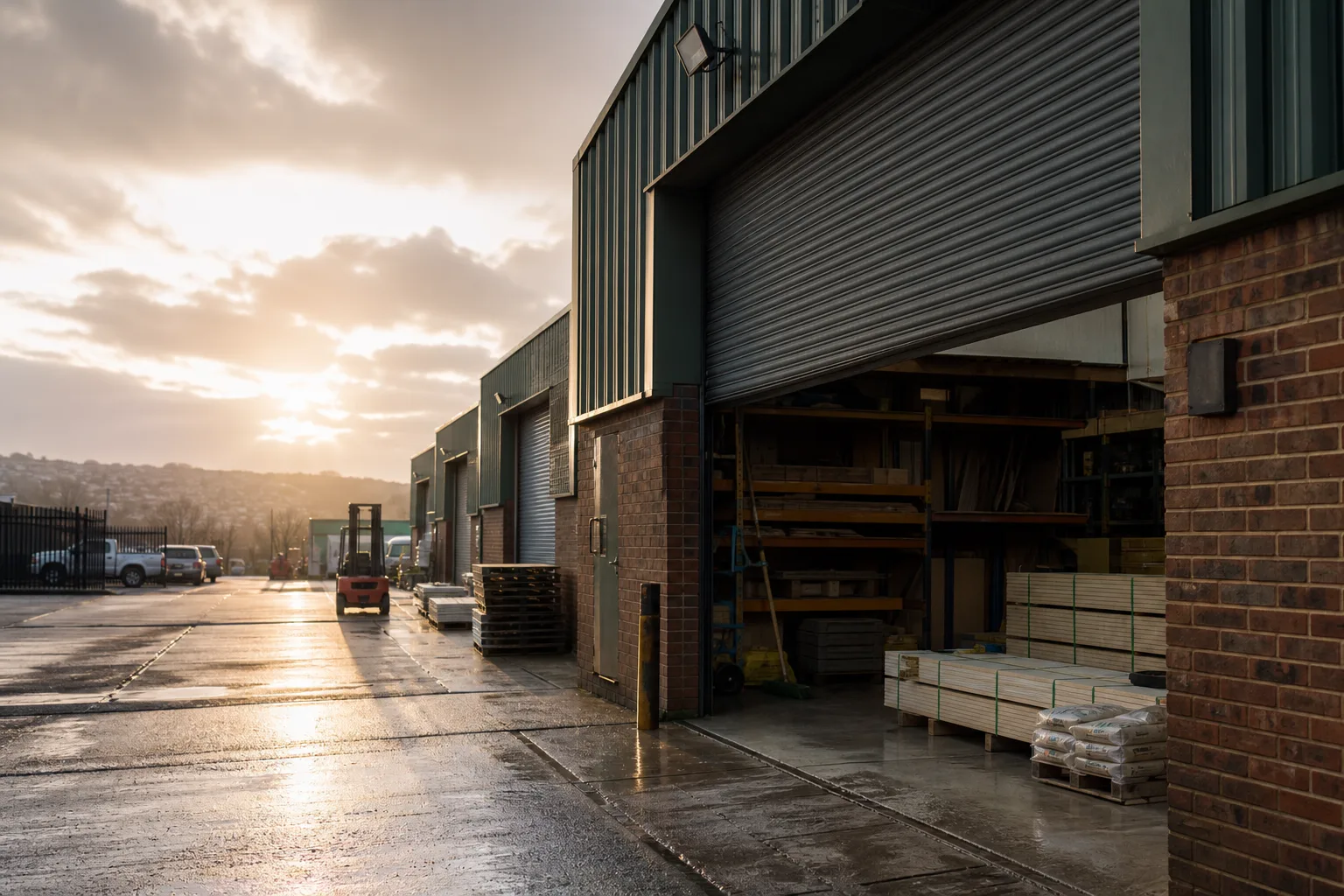
Industrial stock around Brighton is concentrated in three corridors. The Hollingbury and Crowhurst Road estates in BN1 carry light-industrial, trade-counter and small workshop units from 1,500 to 15,000 sq ft. The Lewes Road and Moulsecoomb estates running north of the city centre hold smaller workshop and storage units with good catchment access. And the larger logistics-and-distribution stock sits west of the city at Portslade and Shoreham, supported by Shoreham Port and the A27 corridor running through to Worthing and east toward Lewes. Yields on industrial across East Sussex have compressed materially since 2015 and held firmer than any other commercial class through the recent cycle, supported by last-mile logistics demand and the constrained supply of urban industrial space across Brighton and Hove.
Use cases
Bridging use cases for industrial assets.
Industrial bridging cases in this market run across five repeat patterns. The first is auction purchase of single-let or vacant units, typically £300,000 to £1.5 million, with completion against the 28-day clock. The second is investment-purchase of multi-let trade-counter estates where the buyer plans a refurbishment, a rent review programme and a refinance to term commercial debt. The third is capital raise against an unencumbered industrial freehold, often held by an owner-occupier business that needs short-term liquidity for working capital or for a separate property deposit. The fourth is purchase of poorly-let or part-vacant secondary stock with a clear lease-up plan, where the bridge funds the gap between purchase and stabilised income. The fifth is refurbishment-and-re-let cases where a tired unit is brought up to current EPC and specification before re-letting and refinance. Across all five, lenders care about the unit's letting prospects, the local rental tone, and the realism of the refinance exit at stabilised income.
Brighton context
Industrial Demand from Hollingbury to Shoreham Port
Industrial demand in Brighton is structurally underpinned by Shoreham Port to the west, the A23 and A27 trunk-road network and a constrained supply of urban industrial space inside the Brighton and Hove unitary authority. Shoreham Port handles around 1.8 million tonnes of cargo annually, supports timber, steel, cement and aggregates trades, and feeds a logistics-and-warehousing cluster along the Portslade waterfront. The Hollingbury industrial estate at the northern edge of BN1 is one of the few sizeable industrial holdings inside the city limits and trades sharply on the back of last-mile delivery demand into the Brighton and Hove urban area. The Lewes Road and Moulsecoomb estates serve trade-counter and small workshop occupiers feeding the construction and home-improvement trades active across the regency conversion market. Beyond the city, the East Sussex industrial picture extends through Lewes, Newhaven, Eastbourne and the A22 corridor up through Uckfield and Hailsham, with Newhaven Port and the cross-channel freight route adding logistics demand to that eastern end. Across the county, vacant secondary units have traded sharper than tenanted investments in many sub-markets through the recent rate cycle.
Valuation and lenders
Valuation and lender considerations.
Industrial valuations come back on rent-and-yield for tenanted investments, vacant possession value for empty units, and on a sterling-per-square-foot comparable basis where the asset is small or specialist. LTV caps sit at 65 to 75% on tenanted investments, 60 to 70% on vacant stock, and 65% on owner-occupied capital-raise cases. MT Finance, Octane Capital, United Trust Bank, LendInvest, Hope Capital, Octopus Real Estate and Together all take industrial on bridging, with Shawbrook, Allica Bank and Aldermore more active at the larger end. Lenders increasingly ask for EPC evidence given the MEES regime; sub-E ratings need a clear remediation plan to clear.
What we arrange
What we typically arrange.
A typical industrial bridge in this market sits at £350,000 to £3 million, 65 to 75% LTV, 6 to 12 months, 0.75 to 1.15% per month, arrangement fee 1.5 to 2%. Auction cases complete in 7 to 14 days with title insurance. Investment-purchase cases run 14 to 21 days. Refurbishment cases include a works tranche released against monitoring surveyor sign-off. Exit is typically refinance to term commercial debt, sale to an investor, or sale of vacant possession to an owner-occupier.
FAQs
Industrial bridging questions
Can we complete an industrial unit auction purchase inside the 28-day clock?
+
Yes. Industrial auction completions are core to the book. With the auction pack delivered the morning after the hammer falls, we typically come back with indicative terms inside 24 hours, run the valuation and legal in parallel, and complete in 10 to 14 days using title insurance where the title has any complexity. The 28-day clock is rarely the binding constraint; the binding constraint is usually a slow surveyor or a slow buyer's solicitor.
How do bridging lenders treat EPC ratings on industrial units?
+
Sub-E EPC ratings need to be addressed before the unit can be let under the MEES regime. Lenders price for the remediation cost and the timeline. For a vacant unit at F or G, the bridge often funds the refurbishment to EPC C or better as part of the works tranche. For a tenanted unit with an existing lease, the position depends on the lease length and the landlord's repair obligations. We work the EPC piece up front so it does not surprise the lender at credit committee.
What rates apply to industrial bridging across East Sussex in 2026?
+
Tenanted industrial investments with a recognisable covenant and a clear refinance exit price at 0.7 to 0.9% per month at 65 to 75% LTV. Vacant secondary units with a credible lease-up plan price 0.9 to 1.15% per month at 60 to 70% LTV. Specialist or single-purpose industrial buildings price higher, reflecting the narrower buyer pool at exit. Arrangement fees sit at 1.5 to 2% across the range. Valuation and legal fees are borrower-paid on both sides.
Tell us about the deal
Indicative terms within 24 hours.
A short triage call, then a sized indicative offer against a named lender for your industrial property in Brighton or across East Sussex.
Regulated bridging on owner-occupied residential property falls under FCA regulation. Unregulated bridging on commercial and investment property does not. We are not directly regulated by the Financial Conduct Authority, and we introduce regulated cases to authorised partners who carry out the regulated activity.
Next step
Talk to a Brighton industrial bridging specialist.
We arrange short-term finance on industrial property across Brighton, the Brighton and Hove unitary authority and the wider East Sussex market. Indicative terms in 24 hours.