Property type: Leisure
Leisure Property Bridging Loans Brighton
We arrange bridging finance against leisure property across the Brighton seafront, Kings Road, Brighton Marina, the Lanes, Kemptown and the wider East Sussex coastal-and-tourism market. Loan sizes run £250,000 to £10 million, terms from 6 to 18 months, completions in 10 to 21 days. Leisure bridging prices at 0.85 to 1.4% per month depending on trading position, refurbishment scope and the credibility of the exit.
- Decisions in hours
- Completion in days
- £100k to £25m
- East Sussex specialists
The asset class
What leisure property looks like in East Sussex.
Leisure as an asset class covers hotels, guesthouses, restaurants and bars, gyms and health clubs, soft-play and indoor-leisure venues, and the small mixed hospitality-and-retail stock that lines Kings Road and the seafront from Hove east through Kemptown. Trading-business value drives most of these assets, which makes the underwriting more like specialist commercial lending than vanilla property bridging. Vacant possession value, the alternative-use figure and the going-concern value can all differ materially. Bridging lenders typically lend on the lower of vacant possession value and going-concern value, with a haircut where the trading position is weak or the asset is materially specialist.
Use cases
Bridging use cases for leisure assets.
Leisure bridging cases in this market sit in a tight set. We see purchases of small hotels and guesthouses along the Kings Road seafront and Kemptown, typically £600,000 to £2.5 million, where the buyer plans a refurbishment and a refinance to term commercial debt once trading is rebased. We see purchases of restaurant and bar units coming out of administration where speed of completion is the price of getting the deal. We see capital raises against unencumbered leisure assets held by long-term operators, often to fund the deposit for the next acquisition. We see change-of-use plays where a tired leisure unit is bought, converted to residential or mixed-use, and exited to refinance or sale. And we see development-exit cases on small coastal-leisure schemes where practical completion is reached and the bridge refinances the development facility while units sell out. Across all of these, lenders care about trading evidence, the operator's track record, and the exit. A vague trading projection kills more leisure bridges than any building issue.
Brighton context
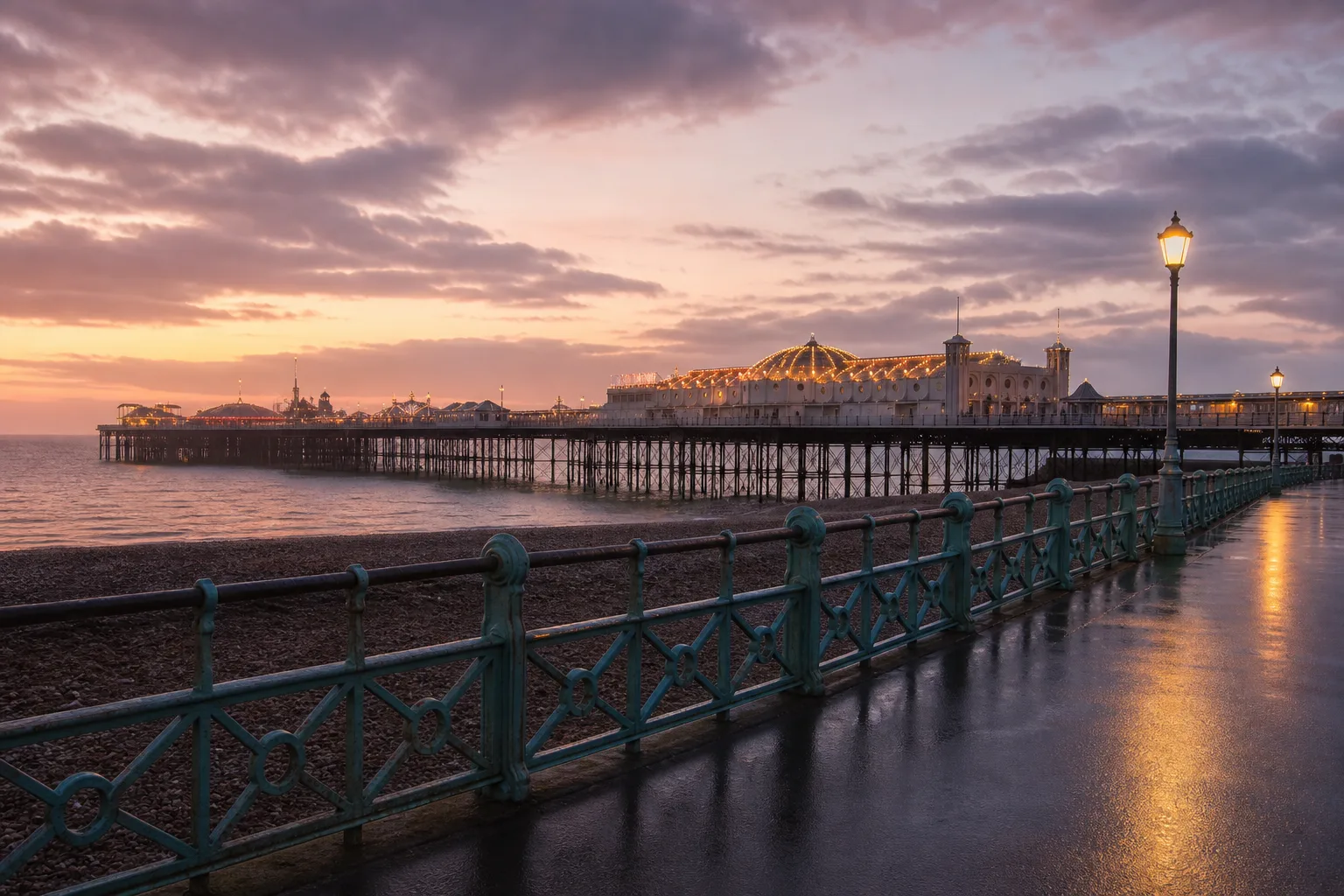
Brighton Pier, Brighton Marina and the Sussex Coast Visitor Economy
Brighton leisure trades on a tourism base that is materially stronger than most equivalent South East cities. Tourism contributes around £380 million annually to the local economy and supports a year-round visitor flow that is not matched by other South Coast resorts. Brighton Palace Pier draws around 11 million visitors a year and anchors the central seafront leisure cluster running from the i360 east toward the Aquarium and Kemptown. Brighton Marina (BN2) holds a contained leisure cluster with restaurants, a casino, cinema and waterfront food-and-beverage operators. The Royal Pavilion and the wider Pavilion Quarter draw a heritage-and-cultural visitor base that supports the surrounding hospitality stock. The Lanes and North Laine in BN1 hold a dense run of independent restaurants, bars and food-led leisure operators. Kemptown along St James's Street trades on a year-round resident food-and-beverage market. Beyond the city, East Sussex coastal leisure runs east through Newhaven, Seaford, Eastbourne and Hastings, with the South Downs national park supporting a parallel rural hospitality market through Lewes, Uckfield, Hailsham, Heathfield and Forest Row. Bridging lenders read all of this. Coastal leisure with a clear seasonality pattern, recognisable trading history and a credible operator behind the wheel sits comfortably at 60 to 65% LTV.
Valuation and lenders
Valuation and lender considerations.
Leisure valuations come back on a trading-business basis where the asset is going concern, and on a vacant-possession-with-alternative-use basis where trading is weak or interrupted. Bridging lenders typically lend on the lower figure with an additional haircut. LTV caps sit at 55 to 65% on most leisure cases, with the higher end reserved for hotels with strong trading evidence and the lower end for specialist or single-use leisure. MT Finance, Octane Capital, Hope Capital, United Trust Bank and Together all take leisure on bridging, with Shawbrook, Cambridge & Counties and OakNorth stronger on hotels and the larger end of the market. Trading accounts, RevPAR data for hotels and a clear operator narrative all help the case clear underwriting.
What we arrange
What we typically arrange.
A typical leisure bridge sits at £500,000 to £3 million, 55 to 65% LTV, 9 to 18 months term, 0.85 to 1.3% per month, arrangement fee 1.5 to 2%. Hotels and guesthouses price softer than specialist single-use leisure. Refurbishment cases include a monitored works tranche. Exit is typically refinance to term commercial debt, sale to a trading operator, or change-of-use exit to residential where the planning supports it. Completion in 14 to 21 days is normal; auction-style speed is achievable with title insurance.
FAQs
Leisure bridging questions
Can we bridge a small hotel purchase on the Brighton seafront?
+
Yes. Small hotel and guesthouse purchases along Kings Road and around Kemptown are a regular part of the leisure book. Lenders need trading accounts for the last two to three years where the business has been operating, a clear refurbishment and trading plan, and a credible refinance exit at stabilised income. Loans typically run 60 to 65% LTV on the lower of vacant possession value and going-concern value, with the works tranche released against monitoring sign-off. Refinance to term commercial debt is the most common exit at 12 to 15 months.
How do bridging lenders treat restaurant or bar purchases coming out of administration?
+
Speed is usually the binding constraint and bridging is built for it. We have completed restaurant and bar purchases in 7 to 14 days from offer where the title is clean and title insurance is available. Lenders lend against the lower of vacant possession value and any defensible going-concern figure, with an extra haircut where trading has been interrupted. LTV typically caps at 55 to 60% on these cases. The exit is usually a sale to an operator or a refinance once the business is re-established and trading.
Does coastal leisure benefit from year-round demand in Brighton and East Sussex?
+
Yes. The Brighton visitor economy runs year-round on the back of the Pier, the Pavilion, the Lanes and the wider conference, festival and events calendar, which gives Brighton hospitality stock a softer seasonality curve than most South Coast resorts. East Sussex more broadly through Eastbourne, Hastings, Seaford and into the South Downs carries a stronger summer peak with shoulder-season demand from cultural and heritage tourism. Lenders price the Brighton stock more confidently as a result.
Tell us about the deal
Indicative terms within 24 hours.
A short triage call, then a sized indicative offer against a named lender for your leisure property in Brighton or across East Sussex.
Regulated bridging on owner-occupied residential property falls under FCA regulation. Unregulated bridging on commercial and investment property does not. We are not directly regulated by the Financial Conduct Authority, and we introduce regulated cases to authorised partners who carry out the regulated activity.
Next step
Talk to a Brighton leisure bridging specialist.
We arrange short-term finance on leisure property across Brighton, the Brighton and Hove unitary authority and the wider East Sussex market. Indicative terms in 24 hours.